
Stop Frozen Pipes Before They Start: Preventive Plumbing Solutions
There’s a hidden threat lurking in your home’s walls when the temperature falls, and that’s because of the property of water. Water defies the rules: instead of contracting when it freezes, it expands. This seemingly simple quirk of chemistry can unleash destructive consequences for your plumbing.
When water trapped inside your pipes freezes into ice, it swells with a force that can generate thousands of pounds of pressure per square inch, enough to rupture even the sturdiest copper or plastic pipes. The expanding ice acts like a piston, shoving unfrozen water toward closed faucets and creating catastrophic pressure surges in unexpected places. This bursts the pipe, and a flood can cause thousands of dollars in damage within minutes.
But the frozen pipes are largely preventable. With the right precautions and a little preparation before winter’s worst arrives, you can protect your home from this costly cold-weather disaster. Here’s everything you need to know to keep your pipes flowing freely all winter long.
Danger Zones That Freeze The Pipe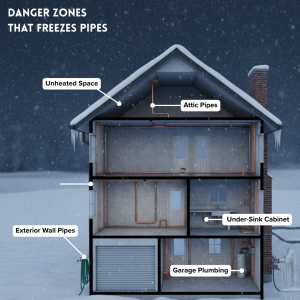
- Outdoor hose bibs, swimming pool supply lines, and water sprinkler systems are highly susceptible because they are directly exposed to severe cold.
- Pipes that run along or inside exterior walls, especially if the walls have little or no insulation, freeze more frequently.
- Water supply pipes in unheated spaces like basements, attics, garages, or utility rooms often freeze.
- Heating system water lines running through baseboards or circulating throughout poorly heated buildings can be a danger zone.
- Bathroom or kitchen room pipes inside cabinets, especially if those cabinets are on exterior walls, can freeze quickly during prolonged cold snaps.
- Garage plumbing, especially near doors or external walls, is highly prone to freezing if the garage is left unheated.
How To Prevent Water Pipes From Becoming Frozen
-
- Insulate Exposed Pipes
Cover bends, valves, and joints. Wrap all exposed water pipes in attics, basements, and garages with foam insulation sleeves or heating tape. Duct tape can be used during sudden cold snaps. - Maintain Indoor Heating
Always maintain your home heat to at least 55 – 65°F, even when away. Uneven heating can leave pipes vulnerable. - Allow Air Circulation
Leave cabinet doors open under sinks and open interior doors so warm air can circulate around the pipes. This keeps enclosed spaces near exterior walls from becoming too cold. - Let Faucets Drip
Running water won’t freeze easily. Let cold water drip from faucets served by exposed pipes during cold spells to maintain flow and relieve pressure inside the pipe.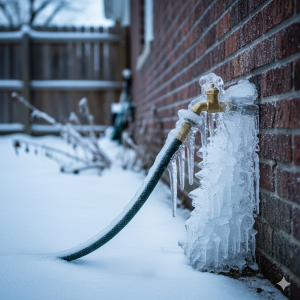
- Disconnect Outdoor Hoses
Drain and disconnect all outdoor hoses before freezing weather begins. Turn off the water supply to outdoor spigots and use faucet covers or insulated caps to protect them. - Seal Drafts and Openings
Close crawl space vents, repair broken windows, and seal cracks around doors and where pipes enter your home. Reducing drafts can significantly lower the chances for frozen pipes. - Additional Tips
- Insulate Exposed Pipes
-
-
- Cover your outdoor water meter or exposed above-ground lines with insulating materials like blankets or containers to trap warm air.
- For extended absences, turn off your home’s main water supply and drain the pipes.
- Locate your main water shut-off valve in case a pipe bursts during a freeze.
-
Following these measures in autumn or early winter can protect your plumbing system and prevent costly damage once freezing temperatures arrive. Remember, pipe freezing is just one risk. For a complete strategy, download our Winter Commercial Property Maintenance Checklist: 10 Essential Preventive Solutions to make sure your entire facility is secured.
What Are The Best Insulation Materials For Outdoor Pipes
| Material | Best Use | Strengths | Considerations |
|---|---|---|---|
| EPDM Rubber | Outdoor & UV-exposed lines | UV & weatherproof | Slightly costlier |
| NBR/PVC Rubber Foam | AC & refrigeration pipes | Moisture & flame resistant | Needs a jacket for outdoor use |
| Fiberglass + Vapor Barrier | Hot water or steam lines | High heat tolerance | Must seal against moisture |
| Polyethylene Foam | Residential outdoor pipes | Flexible & water resistant | Not for high heat |
| Phenolic / Mineral Wool | Industrial high-temp pipes | Fire & thermal protection | Heavy and rigid |
| Rigid Foam (PIR/Polyurethane) | Underground or exposed systems | Long-lasting, strong insulation | Requires UV coating |
What To Do If Pipes Freeze
Mostly, the prevention steps would help you to face the situation safely; perhaps if it fails, quick action is to stop damage and ensure safety. As mentioned in the intro, frozen pipes can burst as ice expands, causing flooding, costly water damage, and even serious injuries. Here’s what to do immediately if prevention measures fail.
- Step 1: Shut Off Water Supply
Turn off your main water valve right away. This prevents water from flooding your home when the frozen pipe thaws or if it has already burst. - Step 2: Open Faucets
Open both hot and cold faucets connected to the frozen pipe. This relieves pressure and gives melting ice somewhere to go as thawing begins. - Step 3: Locate the Frozen Pipe
Check the most vulnerable areas like attics, basements, exterior walls, under the kitchen sinks, or crawl spaces. Frost, bulging, or a lack of water flow are good indicators of the frozen spot. - Step 4: Thaw Safely
Apply gentle heat to thaw the pipe gradually. Use a hair dryer, space heater, or heat lamp starting near the faucet towards the ice area. Avoid open flames, such as blowtorches or lighters, which can ignite materials or damage pipes. - Step 5: Turn Off Electricity if Needed
If water has leaked near outlets or wiring, switch off electricity in affected areas at the circuit breaker. Avoid handling electrical devices near standing water to prevent electrocution. - Step 6: Call a Professional Plumber
If the frozen pipe is hidden behind a wall or ceiling, or if you suspect it’s burst, contact a professional for frozen pipe repair service. We can repair the break, check for hidden leaks, and prevent further freezing damage. - Step 7: Dry and Inspect
Use towels or a wet or dry vacuum to soak up water and ventilate the area to prevent mold growth. Inspect insulation and restore heating or pipe lagging to prevent future freezes.
Conclusion
Frozen pipes don’t have to be an inevitable part of winter. With a few proactive steps, you can protect your plumbing system from even the harshest cold snaps.
MCP Facility Services provides comprehensive plumbing services in Kansas, from pre-winter inspections and pipe insulation to emergency frozen pipe repairs in Kansas. Don’t wait until disaster strikes. Contact us today to schedule a winter plumbing assessment and make sure your home is ready for whatever winter brings.
 Skip to content